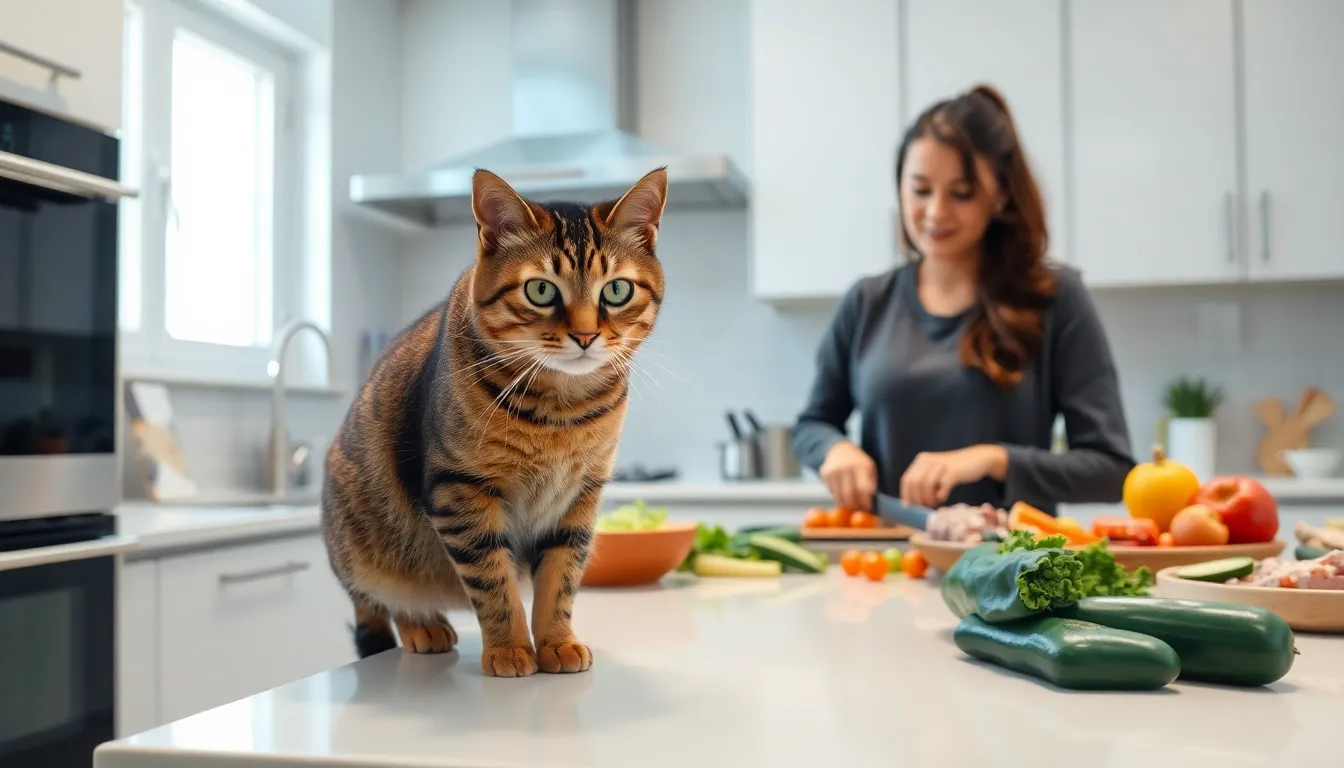
Ever wonder why your cat acts like they’re the sous-chef you never hired? It turns out, the kitchen is more than just a place for meal prep, it’s a feline playground. With the tantalizing aroma of food wafting through the air and curious paws at the ready, your furry friend might be more involved in your culinary adventures than you think. Let’s whisk you through the intriguing realm of cats in the kitchen, blending laughter with insights to make every meal time an enjoyable experience for both you and your whiskered companion.
Cats in the Kitchen
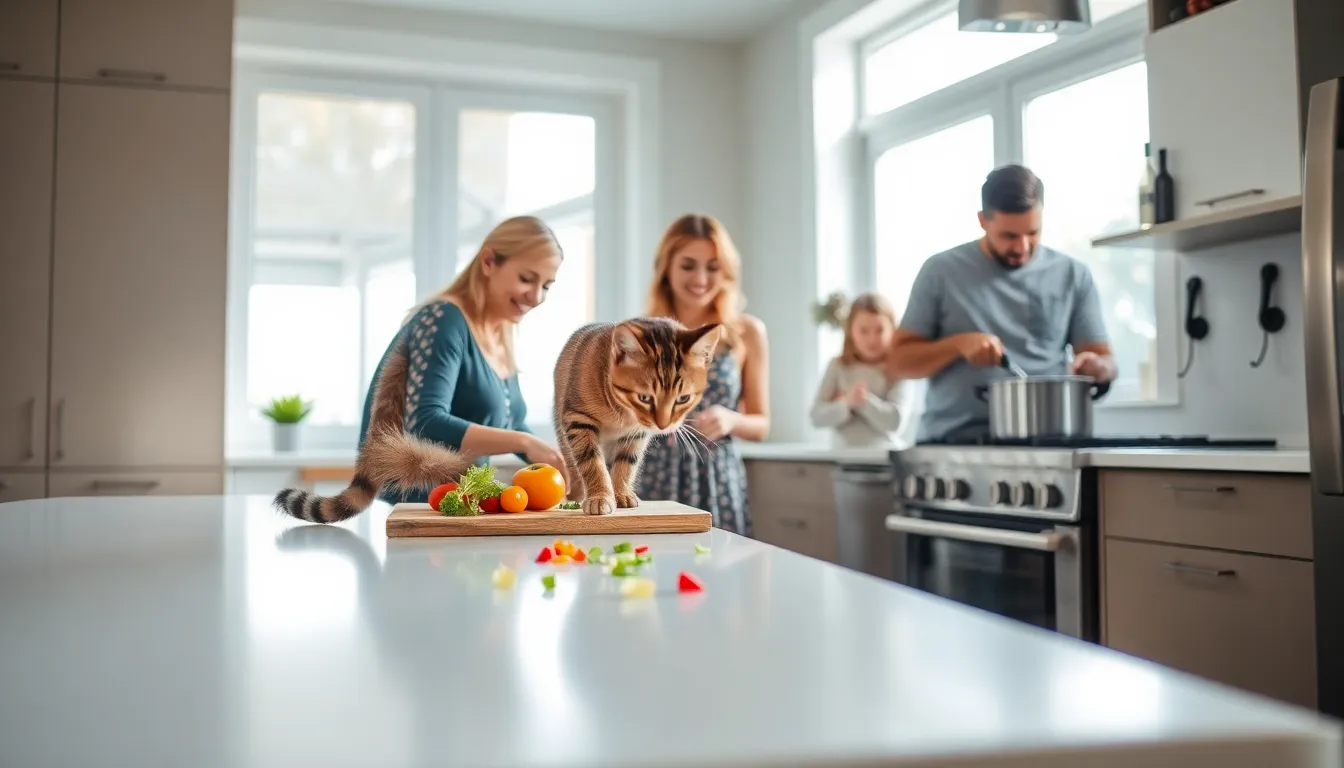
Cats are notoriously curious creatures. Their fascination with your kitchen is a blend of instinct and opportunity. When it comes to food, cats are hardwired to investigate. After all, as natural hunters, the scent of something delicious triggers their senses.
A cat’s keen sense of smell can detect aromas from great distances, making your kitchen a veritable buffet of scents. Whether it’s the sizzle of chicken or the bubbling of a broth, these sounds and smells entice them to wander in. Curiosity doesn’t just kill the cat: it invites them into the culinary fold.
Also, most cats love routine. Your movements in the kitchen, chopping vegetables, stirring sauces, translate into predictability, offering them a comforting backdrop. They’re not just waiting for scraps: they’re also longing for companionship. When you’re busy, they’re watching, waiting, and probably plotting their next move to snag an unsuspecting tidbit or two.
Common Behaviors of Cats In The Kitchen
When cats enter the kitchen, they don’t just stroll in: they bring their unique personalities along for the ride.
- Pawing at the Counter: Many curious cats will try to jump on counters or tables. They love to explore and perhaps even taste-test whatever is left unguarded.
- Vocalizing: Some cats express their desires loudly, whether it’s meowing for food or demanding attention. Don’t be surprised if your kitchen turns into a feline concert.
- Shadowing: Cats are notorious for ‘helping’ like a sous-chef. They’ll follow you closely, ready to lend a paw or two, hoping that dinner will somehow land in their bowl.
These behaviors are typically harmless, though they may humanize our feline friends a bit too much. Understanding these traits can enhance your cooking experience and keep feline trouble at bay.
Safety Precautions for Cooking With Cats
Cooking with cats in the kitchen can easily turn into an episode of high-stakes culinary chaos. To keep it delightful and safe, follow these tips:
- Keep Ingredients Out of Reach: It’s crucial to store your food items safely. Cats love to explore, and that means jumping up onto counters or stealing food when your back is turned. Make sure everything is secure, especially those human foods that are toxic to cats, like onions and chocolate.
- Use Non-Toxic Cleaning Supplies: After cooking, it’s not just about the food: it’s about the space. Ensure that your cleaning supplies are pet-friendly. The last thing you want is a curious cat ending up in a toxic situation.
- Supervise Closely: Keep an eye on your kitty, especially around hot surfaces and sharp kitchen tools. It’s better to be safe than sorry.
By practicing these simple precautions, you’re not just keeping your kitchen safe: you’re also ensuring that your furry friend enjoys their time in the cooking space without any mishaps.
Creating a Cat-Friendly Kitchen Environment
A successful kitchen isn’t just about having the right tools: it’s about creating an inviting atmosphere for your feline friend, too. Here are some ideas that can enhance the cooking experience for both of you:
- Cat Shelves: Consider installing shelves within your cat’s reach. These allow cats to observe you from above, satisfying their curiosity while keeping them away from counter spaces.
- Designated Spot: Create a cozy spot for your cat. A comfy mat or a cat bed in a corner will encourage them to stay safely out of the way while allowing them to keep an eye on your culinary antics.
- Interactive Toys: Place interactive toys in the kitchen. This keeps them occupied while you cook, reducing the chances of them swiping at your ingredients or utensils.
By incorporating these ideas, you can turn your kitchen into a space where both cats and humans can thrive harmoniously.
Benefits of Having Cats In The Kitchen
Believe it or not, having your cat around while you cook can be beneficial.
- Enhanced Mood: Studies have shown that pets can reduce stress. Their purring and curious antics can turn a mundane cooking task into a joyous activity, bringing smiles, and laughter to the home.
- Increased Mindfulness: Cooking with cats encourages more mindful actions. You become more aware of your surroundings, including keeping them safe and entertained while preparing meals.
- Love and Companionship: Cooking can be a solitary task: having your cat nearby fills the kitchen with warmth and companionship. Their presence can make your time in the kitchen feel less lonely, especially during long meal-prepping sessions.
Eventually, having a cat around in the kitchen fosters a loving atmosphere, turning meal prep into delightful moments together.
Cooking Tips for Cat Owners
When preparing meals with your feline friend by your side, keeping a few cooking tips in mind can make the experience smoother:
- Prepare Cat-Friendly Treats: While you’re cooking, why not whip up a small batch of cat treats too? Easy recipes using tuna or chicken can keep your cat satisfied while you focus on your dish.
- Teach Commands: Teaching basic commands like ‘off’ can help manage any unwanted kitchen behaviors. Positive reinforcement will encourage them to respect your space.
- Be Mindful of Spills: Accidental spills happen, especially in a busy kitchen. Clean up quickly to prevent any sneaky snacking or toxicity from occurring.
By applying these tips, not only do you ensure a more enjoyable cooking experience, but you also nurture a safer environment for your cat.
About Author