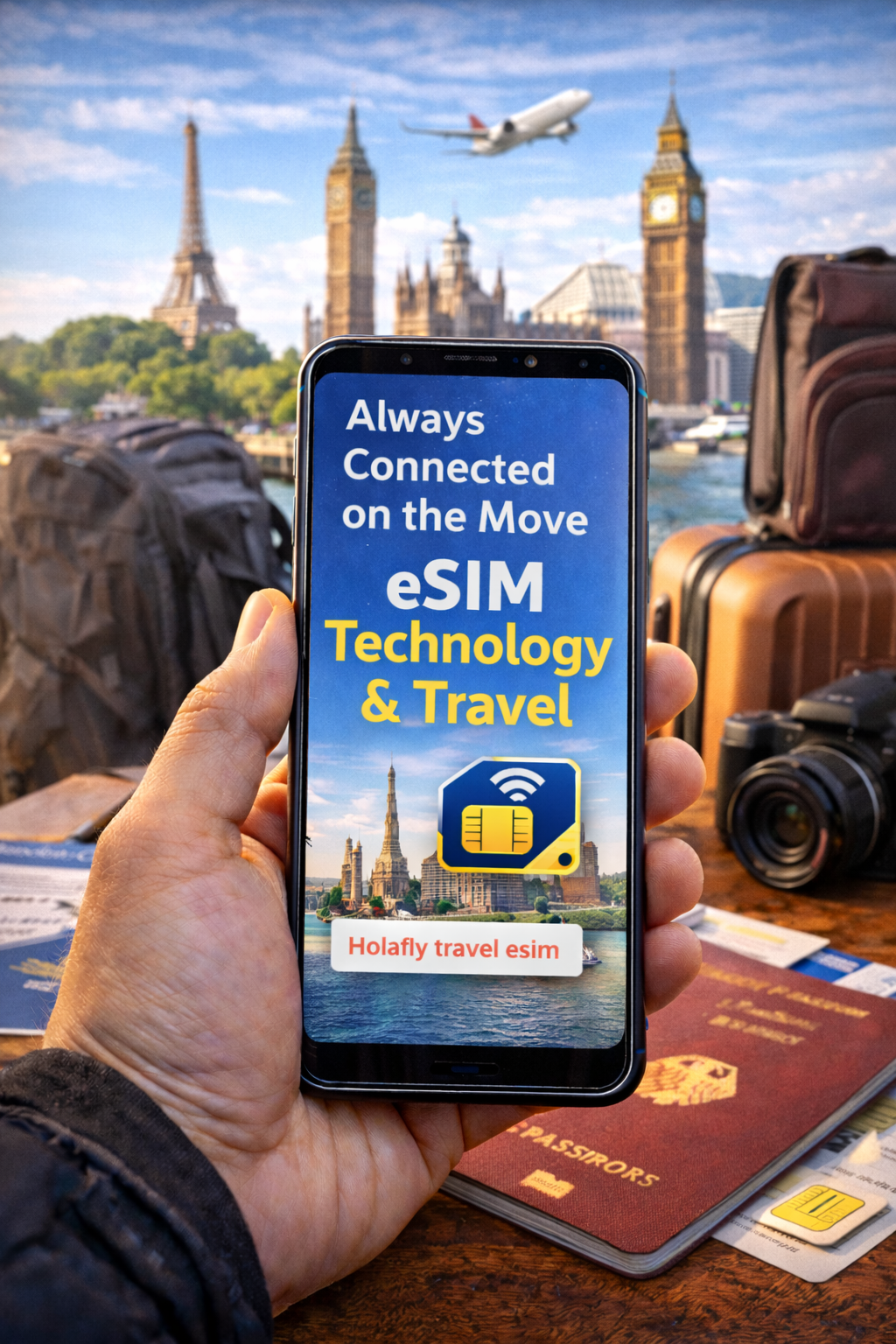
Travel today looks very different than it did even a decade ago. Smartphones have become boarding passes, travel guides, wallets, translators, and workstations—all rolled into one device. For American travelers, whether flying overseas, crossing borders for business, or working remotely while on the move, one expectation has become universal: being connected at all times.
Yet mobile connectivity is often where friction still exists. Expensive roaming plans, confusing local SIM cards, and time wasted trying to get online can disrupt even the best-planned trips. This is where eSIM technology is quietly reshaping the travel experience.
The connectivity problem modern travelers still face
Despite advances in mobile networks, international connectivity remains surprisingly inconvenient. Many U.S. travelers rely on roaming plans offered by their home carriers, only to discover high daily fees, limited data, or reduced speeds abroad. Others attempt to buy physical SIM cards at their destination, which can involve:
- Finding a local carrier store
- Dealing with language barriers
- Swapping SIM cards and risking loss of the original
- Waiting until arrival to get connected
For short trips, business travel, or multi-country itineraries, these steps feel increasingly outdated in a digital-first world.
What is an eSIM, exactly?
An eSIM (embedded SIM) is a digital SIM built directly into modern smartphones, tablets, and laptops. Instead of inserting a physical card, users download a mobile data profile digitally—often by scanning a QR code or using an app.
From a user perspective, the difference is simple but powerful:
- No physical SIM card to handle
- No store visits or shipping delays
- Activation can happen before departure
- Multiple data plans can coexist on one device
Most recent iPhone, Google Pixel, and Samsung Galaxy models already support eSIMs, making the technology accessible to a growing number of travelers.
Why eSIMs fit modern travel habits
Today’s travelers expect technology to adapt to them—not the other way around. eSIMs align perfectly with how people already plan and experience trips.
Instant connectivity
With an eSIM, travelers can land and immediately access maps, ride-hailing apps, hotel details, or work messages—no searching for Wi-Fi or SIM kiosks.
Flexibility across destinations
Many trips involve multiple countries. eSIMs eliminate the need to buy and manage separate SIM cards for each stop.
Predictable costs
Instead of surprise roaming charges, eSIM plans offer clear data allowances and pricing, helping travelers stay in control.
For travelers looking for a flexible, digital-first solution, options like the Holafly travel esim illustrate how eSIM technology can simplify staying connected across borders without adding logistical complexity.
A natural extension of digital lifestyles
The rise of eSIMs mirrors broader shifts in how technology integrates into everyday life. Physical components are increasingly replaced by digital systems—credit cards become mobile wallets, documents move to the cloud, and keys turn into smartphone apps.
Connectivity is following the same path. Instead of being tied to physical cards and local infrastructure, mobile access becomes software-based, portable, and adaptable. This is especially relevant for:
- Remote workers and digital nomads
- Frequent business travelers
- Creators and freelancers working across time zones
- Travelers who value speed and simplicity
In each case, the goal is the same: reduce friction and focus on what actually matters.
Security and convenience combined
Public Wi-Fi networks are widely used by travelers, but they come with risks—especially when accessing sensitive accounts or work platforms. Mobile data connections via eSIMs offer a more secure alternative, reducing dependence on open networks.
At the same time, eSIMs allow users to keep their primary phone number active for calls or messages while using a separate data plan for travel. This dual functionality is particularly useful for staying reachable without compromising cost or performance.
Looking ahead: connectivity as infrastructure
As travel continues to rebound and remote work becomes more normalized, expectations around connectivity will only increase. Being online is no longer a perk—it’s part of basic travel infrastructure, much like transportation and accommodation.
eSIMs represent a shift toward invisible technology: tools that work in the background, quietly improving experiences without demanding attention. Travelers may not think about the technology itself—but they notice when everything simply works.
About Author