
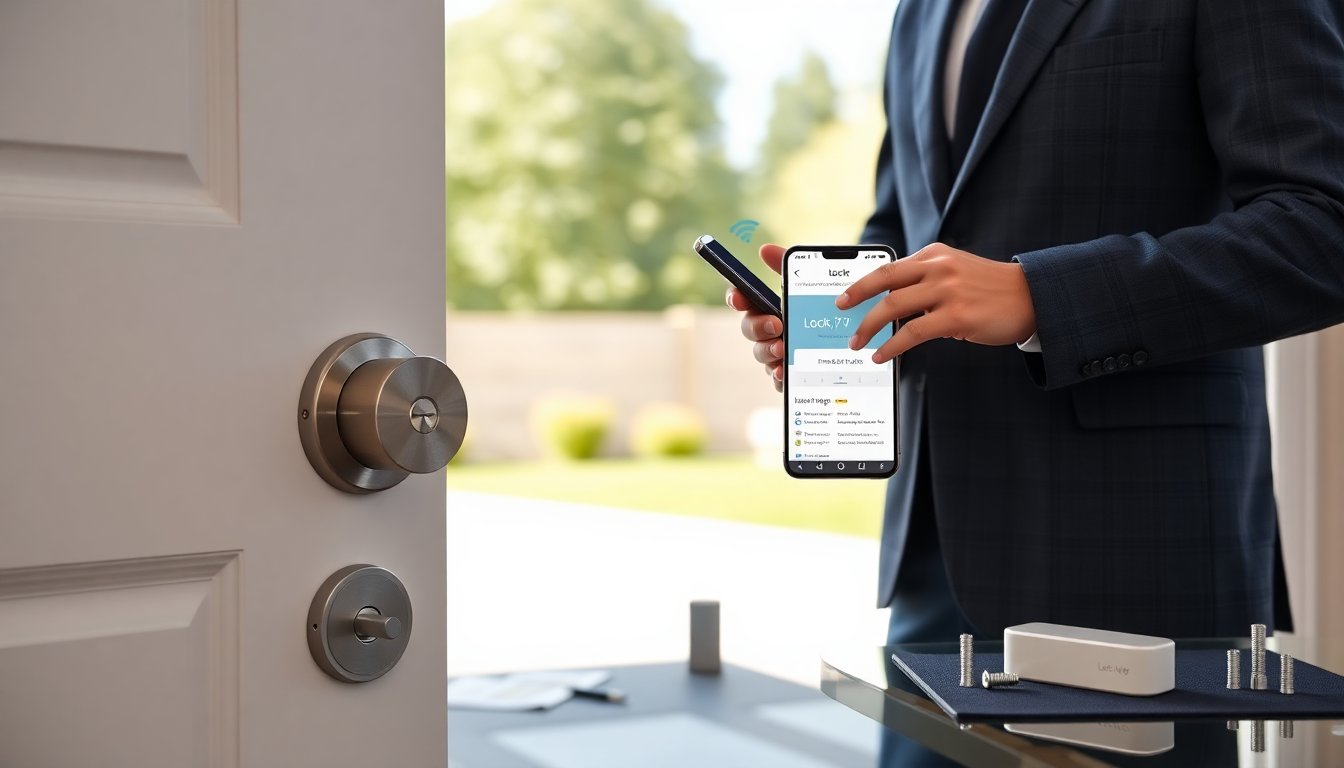
lock-7 is a smart deadbolt that aims to replace a standard lock. It offers remote access, local control, and timed user codes. The product targets homeowners, renters, and small businesses that want a modern lock with simple setup. The company sells a single-unit model and an extended kit for multi-door installations. This article explains who should consider lock-7 and what to expect from its features and security.
Key Takeaways
- Lock-7 is a smart deadbolt that replaces standard locks, offering remote access, timed user codes, and easy installation without major door modifications.
- The lock features ANSI Grade 2 certification, tamper alarms, and secure AES-128 encryption to ensure strong physical and digital security.
- Users can control Lock-7 via Bluetooth, Wi-Fi bridge, or Z-Wave for home automation, with local control maintained even during internet outages.
- Installation is straightforward with no hard wiring required, fitting standard doors and guided by a mobile app that also manages user codes and access times.
- The company provides over-the-air firmware updates, a two-year warranty, and advanced security features like two-factor authentication and a bug bounty program.
- Lock-7 suits homeowners, renters, landlords, property managers, and builders looking for a modern, secure, and connected lock solution with audit logs and guest access management.
What Is Lock-7 And Who Is It For?
lock-7 is a motorized deadbolt with a smart controller and mobile app. It replaces an existing deadbolt without major door changes. The device works with keyed entry on the outside and a thumb-turn on the inside. It targets people who want remote access and audit logs. It also fits landlords who manage short-term rentals and property managers who need temporary codes. lock-7 suits builders who add smart options to new homes. It does not suit users who need fully mechanical, offline-only locks.
Key Features And Specifications
lock-7 offers secure motor drive, cloud sync, and local fallback. It lists a certified ANSI Grade 2 latch and a tamper alarm. The device supports multiple user codes and time-limited access. It logs events to the app and to an optional local hub. lock-7 reports battery level and offers auto-lock timing. It supports voice control through third-party platforms when paired. The manufacturer provides a two-year hardware warranty and over-the-air firmware updates for security patches.
Hardware Design, Build Quality, And Battery Life
lock-7 uses a solid zinc-aluminum housing and stainless steel bolt. The unit resists common physical attacks and meets weather seals for exterior use. It fits standard door preparations with minimal shimming. The thumb-turn uses a low-profile design to reduce snagging. lock-7 runs on four AA batteries. The company rates battery life at twelve months with normal use. The app alerts when batteries fall below 20 percent. Users can trigger a manual key override if batteries fail.
Connectivity, Platforms, And Compatibility (Wi‑Fi, Bluetooth, Z‑Wave)
lock-7 ships with Bluetooth LE for direct mobile control and optional Wi‑Fi via a bridge accessory. It also offers Z‑Wave support in a pro edition for hub integration. The mobile app runs on Android and iOS. The device works with common smart-home platforms after pairing the bridge or Z‑Wave module. Local control remains available when cloud services drop. lock-7 uses secure pairing and encrypted channels for routine commands. It limits remote commands when the bridge reports no connectivity to reduce risk.
Step‑By‑Step Installation Guide
lock-7 ships with a template, screws, and mounting plate. The installer checks door thickness and backset first. They remove the old deadbolt and keep the strike plate if it fits. The kit aligns the mounting plate with the template. The motor unit slides on and the thumb-turn attaches. The installer powers the unit with batteries, installs the faceplate, and fastens screws. The app guides the user through pairing and initial calibration. The app asks the user to test lock and unlock functions before finalizing the install.
Mounting, Wiring, And Mobile App Setup
lock-7 requires no hard wiring for most installs. The unit fits doors from 35 to 55 millimeters thick with supplied spacers. The user follows the printed template and drills only if needed. For powered installations, an optional low-voltage cable pairs with the bridge. The mobile app prompts the user to create an account and verify email. The app walks through Bluetooth pairing, name assignment, auto-lock timing, and code creation. The app shows battery level and event logs. The user assigns guests specific time windows for access.
Security, Privacy Practices, And Firmware Update Strategy
lock-7 uses AES-128 encryption for Bluetooth sessions and TLS for cloud links. The company stores minimal account data and hashes user credentials. The device isolates local commands from cloud actions when possible to limit exposure. lock-7 pushes firmware patches via the app and bridge. The vendor issues critical patches within 30 days of a confirmed vulnerability. The company offers signed firmware images to prevent tampering. The app logs firmware history and prompts users to update. lock-7 supports two-factor authentication at the account level. The vendor publishes a public security contact and a simple bug bounty for researchers.
About Author


